Pro Tips
Education
The Importance of Mini Projects in Mechanical Engineering Courses
Apr 20, 2026
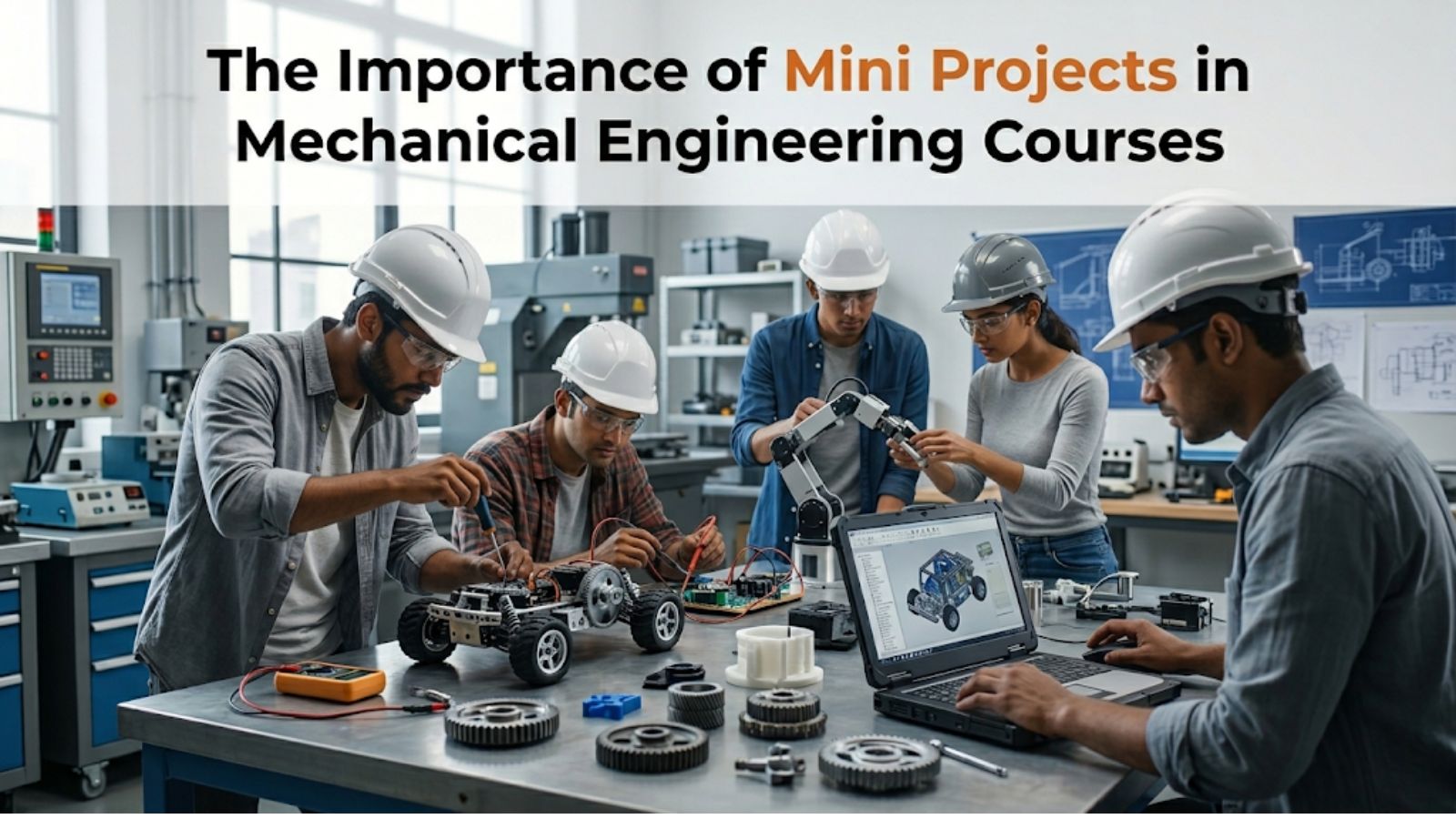
Mechanical engineering is a field that thrives on the practical application of everything that students learn in their courses. While a robust theoretical foundation is the key, the real outcome of its grasp only shines through mini projects that truly bring concepts to life. So, the students at the mechanical engineering college in Vadodara focus on not missing out on the mini engineering projects in their engineering courses.
Let's understand the importance of mini-projects in mechanical engineering courses.
Focus on interest areas.
Mini projects not only help apply theoretical knowledge to practical projects but also enable students to explore their areas of interest in mechanical engineering. Students can develop practical skills through these mini projects. The mechanical engineering college in Gujarat allows students to choose mini projects related to their areas of interest, which benefits students in the long term.
Hands-on experience
Mini projects provide students with an opportunity to move beyond textbooks and improve in practical learning. Working on mini projects at esteemed electrical engineering colleges in Gujarat helps students gain a clear understanding of how engineering principles apply in real-world applications.
Boosts innovation and creativity
Mini projects encourage students to apply theoretical methods with utmost freedom and creativity, thinking outside the box. It helps students explore emerging technologies and modern engineering practices. The freedom to express their ideas and implement them in projecting the mini projects enhances their creativity.
Increase technical skills and portfolio.
Students develop mastery in robotics, automation, and CAD simulation, thereby honing their technical skills. Moreover, a strong, completed mini project improves resumes for job interviews and applications for master's programs.
Teamwork and communication skills
Mini projects are not a solo activity. It requires students to work in groups, which helps them develop teamwork skills. Students working collaboratively at an engineering college like KJIT teach them to manage responsibilities, share ideas, etc. Additionally, presenting projects enhances students' communication skills, which is crucial for professional engineering roles.
Conclusion
Academic mechanical mini-projects give engineering students a chance to turn theory into real-world practice. By working on these projects, students develop problem-solving skills, creativity, and a deeper understanding of core mechanical concepts. Those who actively engage in both building and learning from their projects tend to grow into more capable and industry-ready engineers.
Studying at institutions like K.J. Institute of Engineering & Technology further supports this growth by offering training, well-equipped labs, guidance from experienced faculty, and a strong focus on industry-relevant learning.